Supplemental Restraint Systems (SRS) have been a standard safety feature on vehicles in the United States since the 1998–1999 model years, when dual front airbags became mandatory across passenger vehicles and light trucks. Designed to work alongside seat belts, these systems are engineered to reduce injury by managing the forces placed on occupants during a collision.
SRS System Accuracy and IMU Recalibration
Why SRS System Accuracy Matters
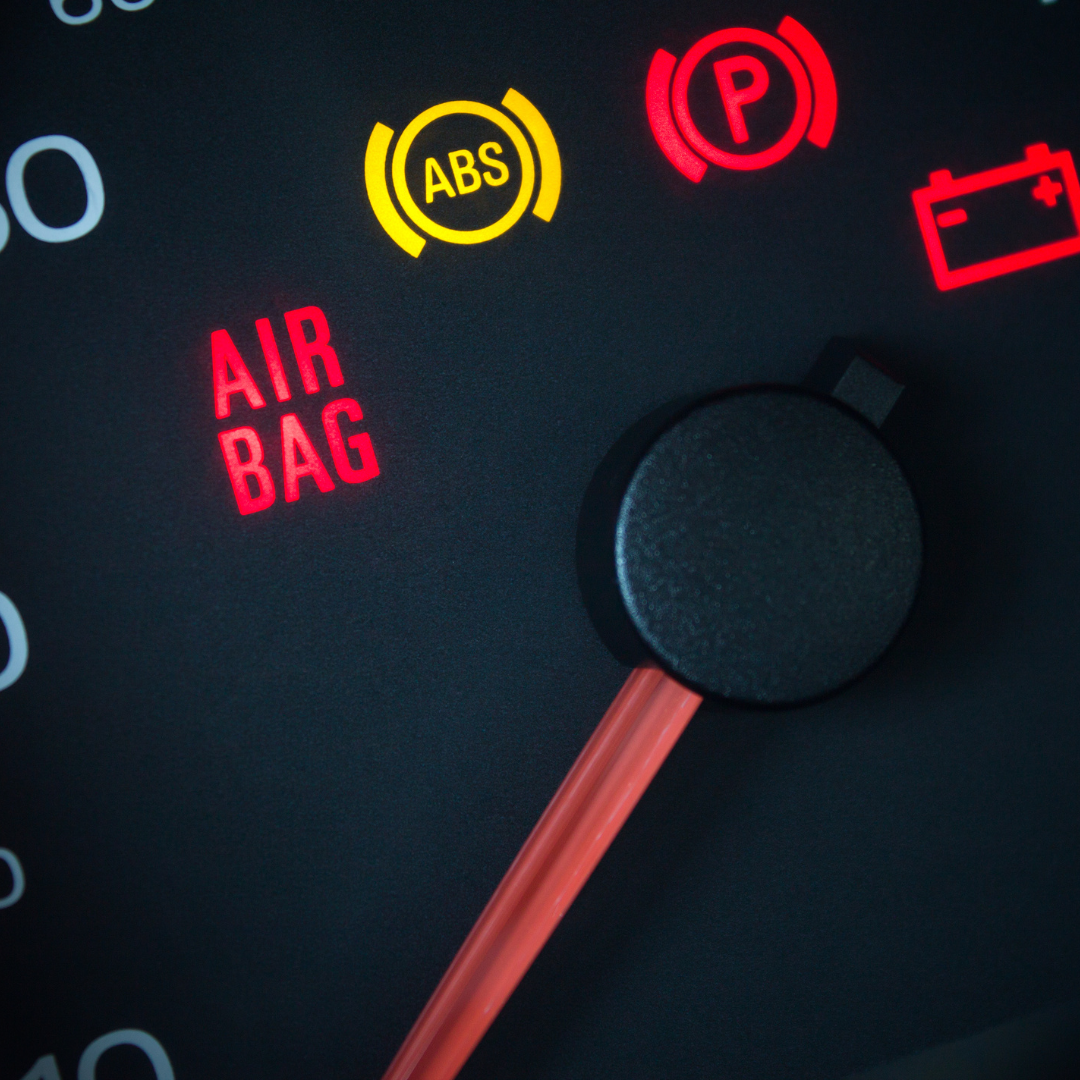
Modern SRS systems protect occupants across three stages of impact:
- Vehicle impact with an external object
- Occupant movement within the passenger compartment
- Internal forces within the body
To reduce injury, manufacturers have introduced a range of safety components including:
- Front, side, curtain, and knee airbags
- Seat‑mounted anti‑submarine systems
- Pyrotechnic seat belt pretensioners
Today’s systems rely on precise sensor input and rapid decision‑making to deploy correctly within milliseconds.
How Modern SRS Systems Work
Modern SRS systems operate as a coordinated network of sensors, control modules, and deployment devices, all working together to determine when and how occupant protection systems should activate.
At the center of the system is the airbag control module (ACM), which continuously monitors inputs from:
- Crash sensors measuring deceleration and impact severity
- Side impact sensors for lateral collisions
- Occupant Detection Systems (ODS) that monitor seat occupancy, weight, and position
- Inertial Measurement Unit (IMU / Yaw Sensor) measuring vehicle acceleration, rotation, and orientation
Using this data, the control module determines:
- Whether a collision meets deployment thresholds
- Which airbags and pretensioners should activate
- How much force should be applied
Modern systems go beyond simple deployment. Features such as dual‑stage airbags and occupant detection allow deployment strategies to adjust based on crash severity and occupant position.
Systems such as Side Impact Protection System (SIPS) integrate side airbags and sensors to provide targeted protection during lateral collisions, further increasing system complexity and reliance on accurate sensor data.
Key Supporting Systems
In addition to airbags and sensors, modern SRS systems include supporting components that directly affect diagnostics and repair outcomes:
-
Pyrotechnic battery disconnects (pyro fuses) isolate electrical power during a collision to reduce fire risk. After deployment, this can result in a no‑start condition, which may be misdiagnosed as a battery, starter, or wiring fault
Why Sensor Accuracy Is Critical
All SRS decisions are based on accurate sensor data and reference points.
The Inertial Measurement Unit (IMU) plays a key role by measuring vehicle motion across multiple axes, allowing the system to determine:
This sensor provides a reference point for the entire system.
If that reference changes, even slightly, the system’s ability to correctly interpret a collision is affected.
Why Calibration Is Required
If the airbag control module or IMU is:
The original reference point is lost.
Without recalibration:
Recalibration restores this reference point.
The Real‑World Diagnostic Challenge
SRS systems are often approached as component replacement repairs, especially following a collision.
In many cases:
However, technicians may encounter:
This typically occurs when calibration requirements are overlooked.
Yet the SRS warning light remains active, or the system is not fully operational.
Technician Thinking and Common Pitfalls
A common technician assumption is: “If the module is reinstalled and no components are damaged; no further action is needed.”
In reality:
Common mistakes:
If the control module or IMU is moved or unbolted, recalibration is required.
The Diagnostic Approach
A structured workflow prevents misdiagnosis and comebacks:
-
Verify customer concern and warning indicators
-
Perform a full pre‑scan
-
Identify SRS‑related DTCs
-
Confirm whether:
-
The vehicle has been in a collision
-
Components have been replaced
-
The SRS module has been disturbed
-
Complete required repairs
-
Perform IMU calibration using Special Functions
-
Verify system operation and clear codes
Additional Post‑Collision Diagnostic Considerations
No‑Start After a Collision
If a vehicle will not start after an impact:
This is commonly mistaken for a mechanical or electrical fault when it is actually part of the SRS safety strategy.
SRS Circuit Faults After Repair
If faults persist:
These issues can trigger:
NEW FUNCTIONALITY
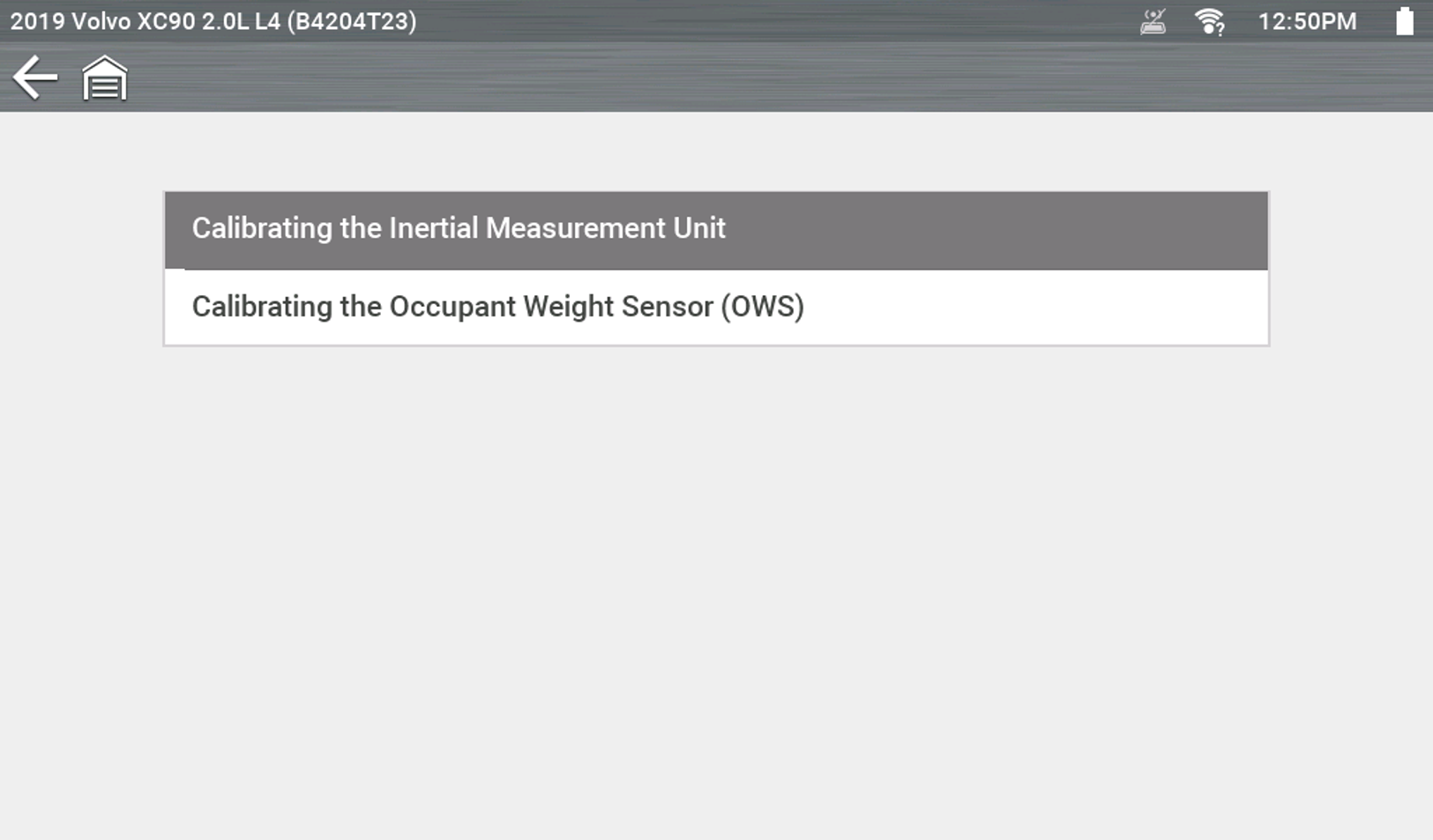
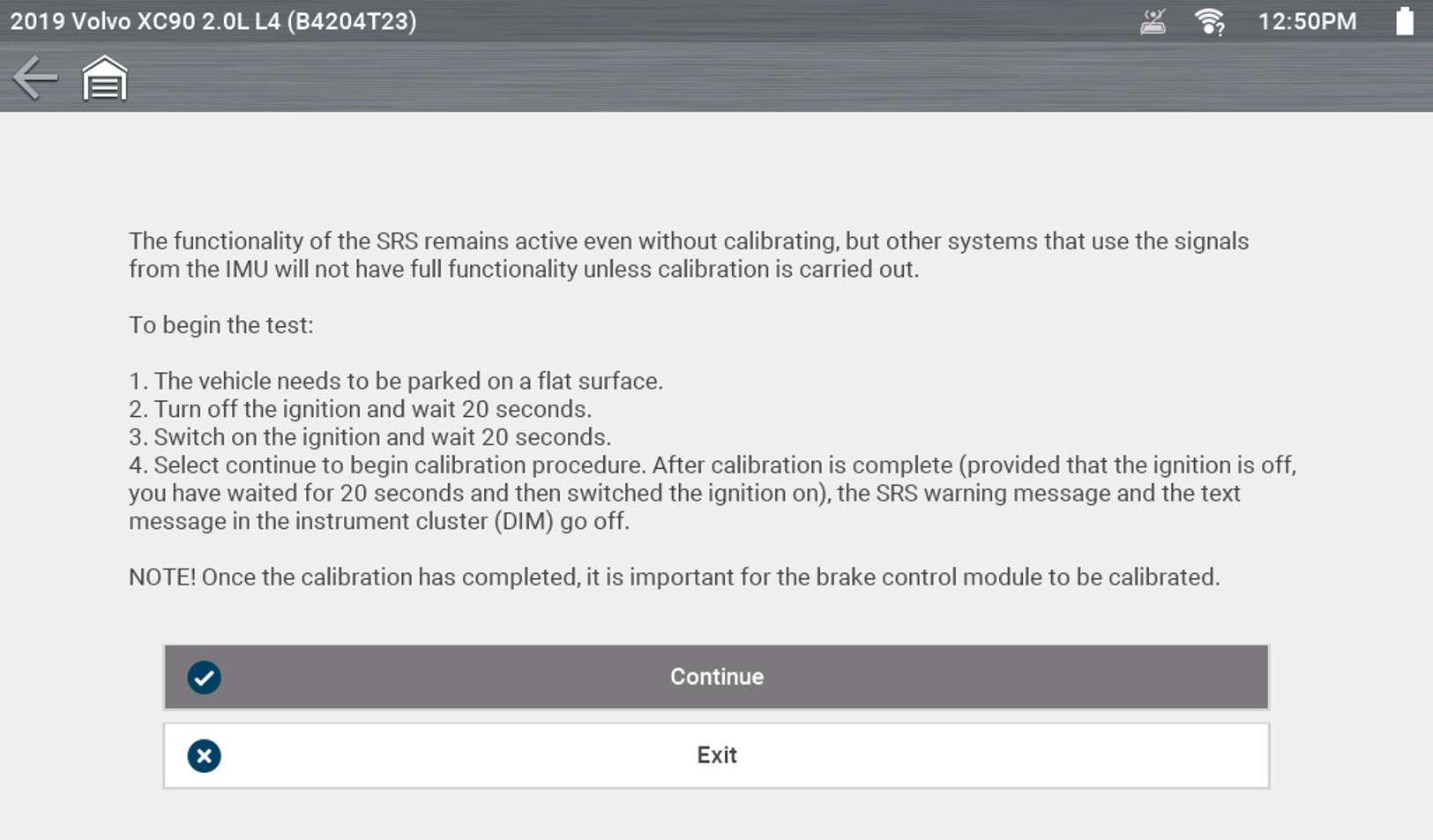
Volvo® XC90 (2016>) Inertial Measurement Unit (IMU) Calibration – Special Function
This latest software release introduces support for IMU calibration on the Volvo XC90.
This function allows technicians to:
This procedure is required when:
Why This Functionality Is Essential
SRS systems are critical safety systems, not convenience features.
The addition of IMU calibration functionality allows technicians to:
Without calibration:
This is not a diagnostic shortcut; it is a required step to complete the job correctly.
Modern SRS systems rely on precise sensor data and accurate system calibration to function correctly. While component replacement is essential, it is only part of the repair process.
By adding IMU calibration capability to Snap‑on diagnostic software, technicians can ensure SRS repairs are complete, systems are fully operational, and vehicles are returned safely to customers.
FAQ’s
1. When is IMU calibration required in an SRS system?
IMU calibration is required whenever the airbag control module or inertial measurement unit has been removed, replaced, or unbolted, even if the vehicle has not been involved in a collision. Any change in module position affects the system’s reference point and requires recalibration to restore accuracy.
2. Can clearing SRS codes resolve a warning light after repair?
No. While clearing codes may temporarily remove the warning light, it does not correct underlying issues such as missing calibration. If recalibration is required and not performed, the warning light will return, and the system may not function correctly.
3. Why is the IMU (Yaw Sensor) so important to SRS operation?
The IMU provides critical data on vehicle movement, orientation, and rotation, allowing the control module to determine impact direction and severity. This information directly influences airbag deployment strategy, making accurate calibration essential for proper system operation.
4. What can cause an SRS light to stay on after repairs have been completed?
Common causes include:
In many cases, the issue is not a failed component, but an incomplete repair process.
5. Why might a vehicle not start after a collision?
Many vehicles are equipped with a pyrotechnic battery disconnect (pyro fuse) that isolates electrical power in the event of an impact. Once deployed, this can prevent the vehicle from starting and must be replaced as part of the repair process.
6. What role do shorting rings play in SRS systems?
Shorting rings are built into airbag connectors to prevent accidental deployment when components are disconnected. If connectors are damaged, misaligned, or not fully seated during reassembly, they can cause SRS fault codes or high‑resistance circuit issues.
7. How does the Occupant Detection System (ODS) affect airbag deployment?
The ODS determines whether a passenger is present and can estimate occupant weight and position. This allows the system to adjust airbag deployment force or disable deployment entirely when necessary, adding another layer of safety and complexity to the system.
8. What is the biggest mistake technicians make when repairing SRS systems?
The most common mistake is treating SRS repairs as component replacement only, without completing required calibration procedures. Missing steps such as IMU recalibration can lead to comebacks, warning lights, and incomplete system operation.
9. How do Snap‑on diagnostic tools help with SRS repairs?
Snap‑on tools provide access to Special Functions such as IMU calibration, along with guided workflows and standardized menu structures. This allows technicians to complete required procedures efficiently and ensure repairs are fully verified before returning the vehicle to the customer.
*This article is intended for informational purposes only and is designed to provide general technical insight. It is not intended to serve as step‑by‑step repair or diagnostic instruction. Always follow manufacturer‑approved procedures and safety guidelines when carrying out vehicle diagnostics or repairs.