Introduction
Clutch replacements on vehicles equipped with an Automated Manual Transmission (AMT) also known as an Electronically Controlled Manual Transmission, demand more than mechanical skill. On the Renault® Megane IV (2016+), completing the repair requires a series of electronic adaptations to ensure the clutch, actuator and gearbox control systems work together correctly. With newly added AMT Special Functions and Actuator Tests in Snap-on® Diagnostic Software, you can finish the repair properly, avoid customer comebacks, and keep this profitable work in-house.

Understanding the Renault® Megane IV AMT System
The Megane IV uses a dual-clutch AMT, which combines the mechanics of a manual gearbox with the precision of electronically controlled clutch and gear operation.
Two clutches—one for odd gears and one for even gears—allow pre-selection of the next gear for smoother, faster changes. The ECU manages clutch engagement, disengagement, and shift timing based on engine load and driving conditions.
Dual Clutch Transmission Fundamentals – How the System Works
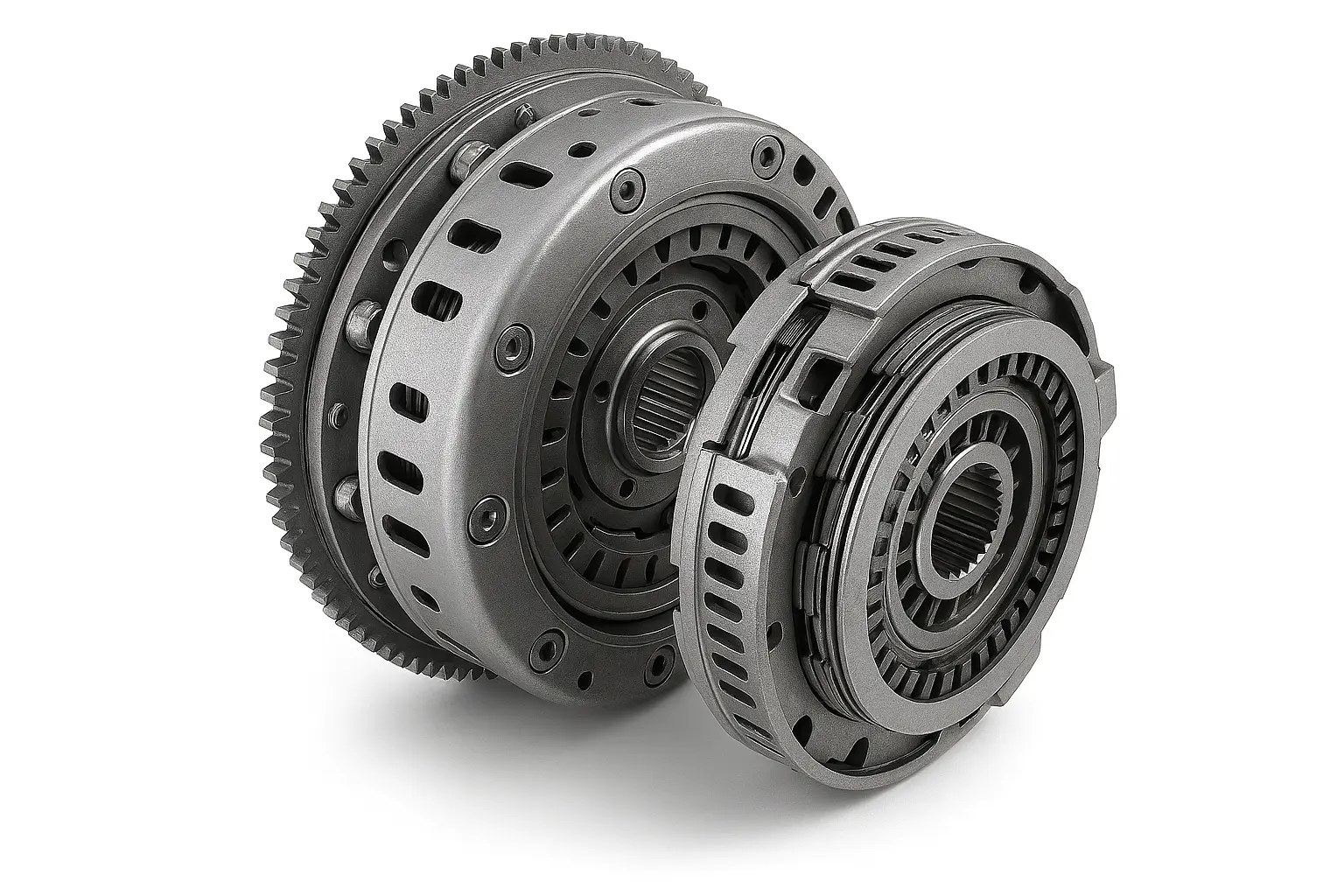
A dual clutch transmission consists of a manual gearbox that is fully controlled electronically. Although mechanically like a manual transmission, the driving experience is closer to a conventional automatic because there is no clutch pedal and gear selection is handled electronically through a sensor-equipped selector lever. Lever position is sent to the transmission control module (TCM) via the CAN bus network.
By automating gear shifts, the system shortens shift times, improves fuel economy, reduces emissions and enhances drivability. The TCM monitors torque demand, engine speed, vehicle speed and various driver inputs to determine the ideal gear for any moment.

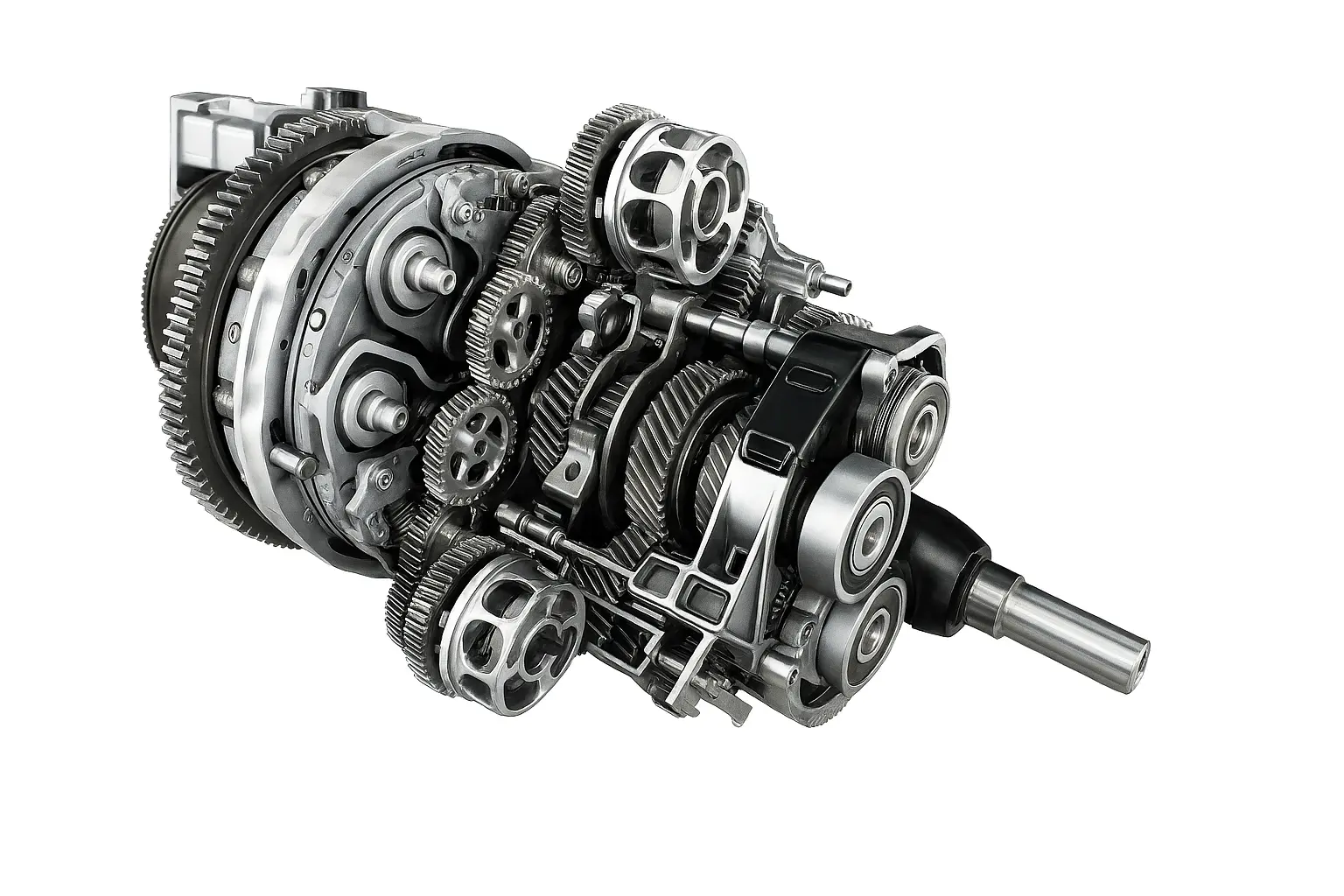
Simplified diagram showing both clutch packs and all six forward gears
The key feature of a dual clutch system is the use of two clutches: one responsible for odd gears (1, 3, 5) and one responsible for even gears (2, 4, 6). For example, when the vehicle sets off in first gear, second gear is already preselected. When conditions are right, the first clutch disengages as the second clutch engages, producing a quick and smooth shift.
Integrated speed sensors monitor both input shafts using signals from pulse wheels, allowing the TCM to detect clutch slip and confirm engagement status. Travel sensors on the selector forks indicate which gear is physically selected. If a sensor fails, the system can isolate that part of the gearbox and provide a reduced selection mode.
Both wet and dry clutch types are used. Wet clutches excel in higher torque applications thanks to better heat dissipation, while dry clutches are typically used in vehicles with torque outputs below 250 Nm, though they are steadily improving in capability.
Before removing or replacing any dual clutch component, always follow manufacturer procedures. Missing a required initialisation or synchronisation step can cause clutch performance issues. On the Renault® Megane IV, these resets and programming steps can be carried out directly using the scan tool.
Common Renault® Dual-Clutch Problems
Dual-clutch transmissions used across the Renault® Megane IV range are designed to deliver smooth performance and better fuel economy, but real-world driving conditions can place significant strain on the system.
Stop–start traffic, short journeys, and more enthusiastic driving styles can all contribute to wear or inconsistent shift behaviour. Below are some of the most frequently reported issues technicians may encounter.
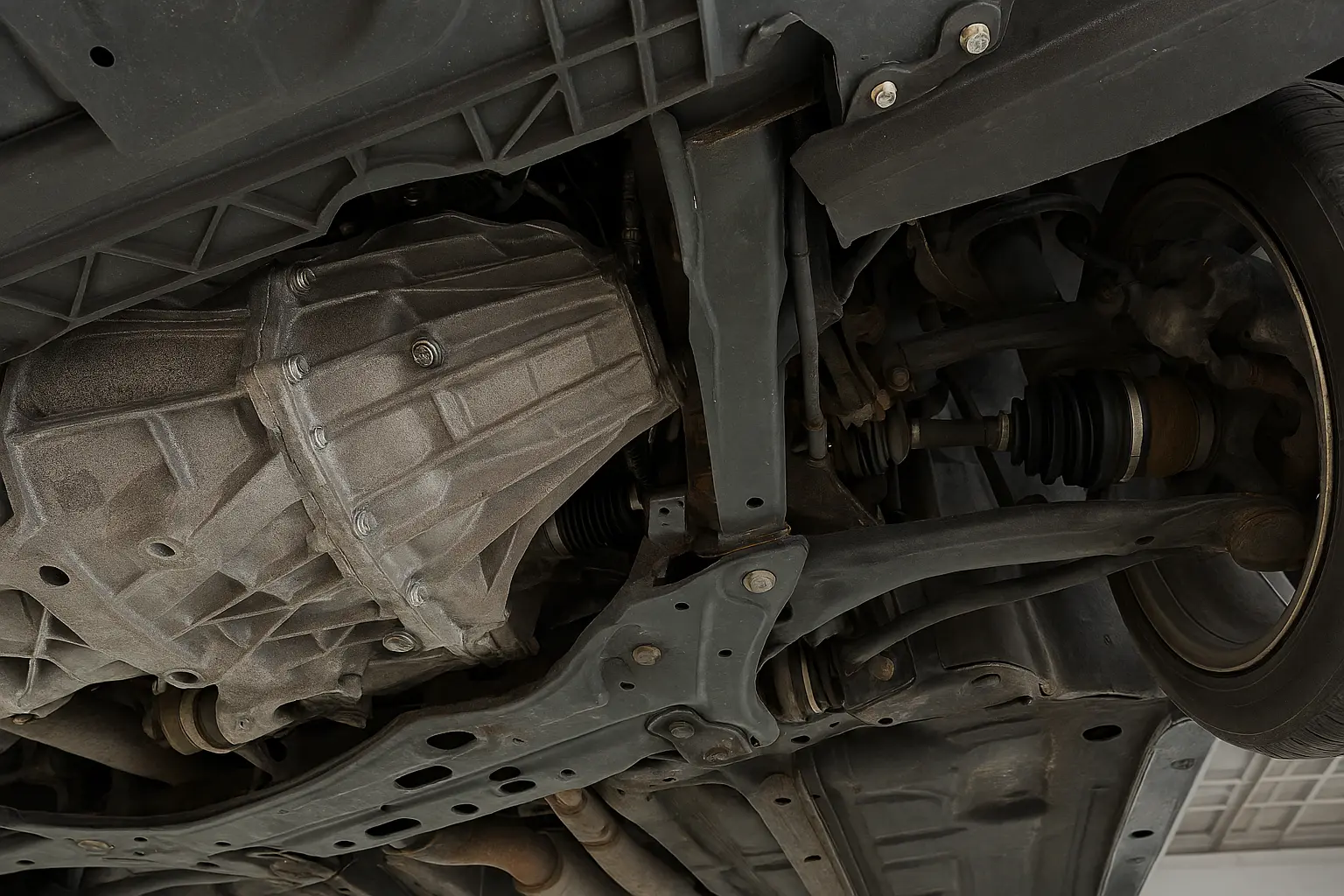
Hesitation When Pulling Away
Some drivers notice a momentary delay or slight surge when moving off from a standstill. Possible causes include:
• Wear developing on the dry clutch surfaces
• Calibration designed to prioritise refinement rather than rapid take-off
• Slowing or sticking of the clutch actuation mechanism
Low-Gear Jerking or Rough Shifts
Shift changes can feel sharper than expected at low speeds, especially in urban driving.
Potential contributing factors:
• Deterioration of the clutch friction material
• Transmission fluid ageing or contamination
• Restrictions or delays inside the mechatronic control assembly
Overheating Alerts in Heavy Traffic
In prolonged crawling or stop–start conditions, the system may run hotter than normal. Typical causes:
• Limited airflow around the gearbox during extended stationary periods
• The clutches slipping for longer than intended during inching manoeuvres
• Earlier software versions not responding quickly enough to temperature rise
Slow or No Reverse Selection
Drivers may report hesitation, noise, or a bump when selecting reverse. Likely reasons:
• Alignment concerns with the selector mechanism
• A delay in the TCM interpreting the driver’s command
• Transmission fluid unable to maintain pressure during rapid direction changes
Key Differences Compared with a Traditional Automatic
Traditional automatic transmissions use hydraulic pressure, torque converters and planetary gearsets. In contrast, the Megane IV’s EDC system uses:
• A dual-clutch assembly
• A robotised shift mechanism
• A Transmission Control Module (TCM)
• Electromechanical actuators that physically engage gears
Because it behaves more like a manual transmission, precise calibration is essential for smooth clutch performance and consistent shift quality.
Why Adaptations Are Critical After Clutch or Module Replacement
Because the Megane IV AMT uses two clutches that must work in precise synchronisation, any work on the clutch packs or the transmission control module requires the system to be re-taught the clutch positions, selection zones, and slip points for both sides of the gearbox. If these adaptations are skipped or incomplete, the TCM cannot correctly manage clutch engagement or gear selection. This can lead to:
• The vehicle may not be drivable
• Clutch slip can occur
• Engagement points may be incorrect
• Shifts may feel harsh or inconsistent
The newly added Snap-on® Special Functions ensure each clutch and its associated actuator are calibrated to the correct positions and reference points simply, without the need to spend time searching technical resources.
Expanded Diagnostic Coverage
With the newly added AMT Special Functions and Actuator Tests for the Renault® Megane IV (2016+), your Snap-on® diagnostic tool now provides the same level of capability that was previously only accessible with a factory or OEM tool. This means you can perform full clutch adaptations, programme slip points, calibrate selection and engagement zones, and complete actuator tests without needing to send the vehicle to a dealer.
This is just one of the thousands of new functional tests and hundreds of thousands of new systems added in the latest Snap-on® Diagnostic Software release. Looking for diagnostic software for cars? Explore the complete list of updates and enhancements on our website.
Renault® Megane IV (2016+)
| New Special Functions |
New Actuator Tests |
|
|
- Shift Transmission to Neutral
|
- Erase Auto Adaptive Values
|
|
- Programme Clutch Position
|
- Programming clutch 1 touch point
|
- Program clutch 1 adjustment
|
- Shift transmission to first and reverse gear
|
- Program clutch 2 adjustment
|
|
- Program Clutch Adjustment
|
- Actuators sequential control
|
|
|
- Programming clutch 2 touch point
|
|
|
|
|
|
|
- Shift Drum Reference Position
|
- Shift transmission to first and neutral gear
|
- Programming Selection/Engaging Zones
|
- Shift transmission to second and neutral gear
|
|
|
|
|
|
|
| |
|
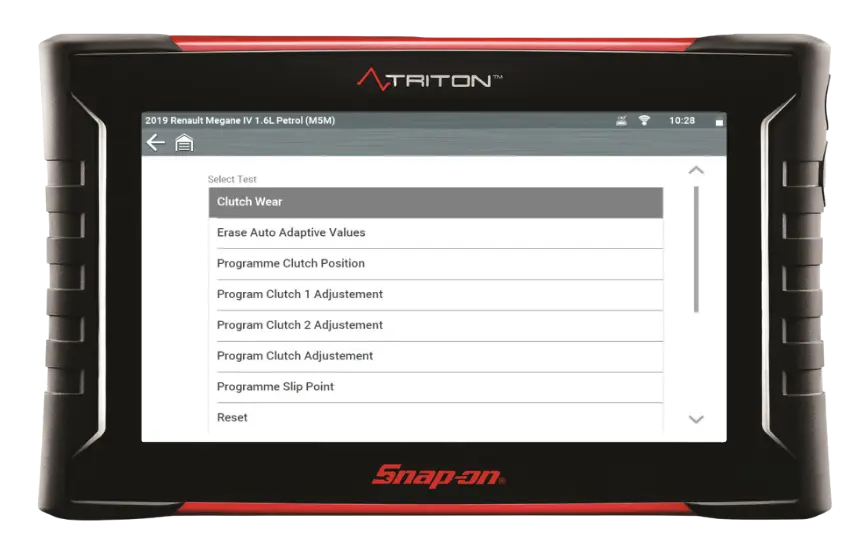
Accessing these special functions is simple: Connect to the vehicle, then navigate:
Vehicle main menu > Common Selections > Transmission > Functional Tests > Special Functions
These functions allow you to complete every stage of the repair, from initial clutch calibration to final engagement zone programming.
Snap-on® Security Link™ Access
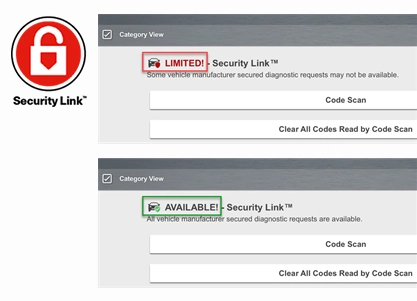
Ensure your tool is connected to Wi-Fi® and your Snap-on Security Link™ services are connected, enabling seamless access to the secure vehicle network.
Need help setting up? Click here for a full guide
Snap-on® Information System
For detailed repair information, discover Snap-on® Information System: all the maintenance and repair information you need to complete the job without wasting time searching the internet for the correct mechanical information or procedure. Click here to learn more.
Practical Tech Tips – Clutch Adaptation on the Renault® Megane IV
• Always complete both clutch 1 and clutch 2 adaptations after any dual-clutch work.
• Programme slip points and calibrate selection/engagement zones according to the software prompts.
• Verify Snap-on® Security Link is active before accessing any Secure Vehicle Functions.
• Save and write all updated ECU/TCM data before completing the repair.
Conclusion
Clutch replacements on the Renault® Megane IV’s dual-clutch AMT can be completed confidently with the full suite of Special Functions and Actuator Tests now available in Snap-on® Diagnostic Software. With clear access to clutch programming, engagement zone calibration and actuator testing, technicians can complete the job accurately and keep high-value transmission repairs in-house. Speak to your Snap-on® representative or visit our diagnostics hub for the latest coverage information.
Speak to your Snap-on® representative or visit our diagnostics hub for the latest coverage information.
Supporting Visuals & Reference Links
FAQ’s
1. Do I need to carry out adaptations after every clutch replacement?
Yes. The system must relearn clutch positions and slip characteristics.
2. What happens if I skip the adaptation procedure?
You may experience slip, harsh shifts or loss of drive.
3. Is Snap-on® Security Link required?
Yes, for all Secure Vehicle Functions.
4. Does this apply to EDC dual-clutch transmissions as well?
The article focuses on the AMT, but EDC systems also require accurate calibration.
5. Which Megane IV engines use the AMT?
Common applications include the 1.3 TCe 140 and 1.6 16V models.